
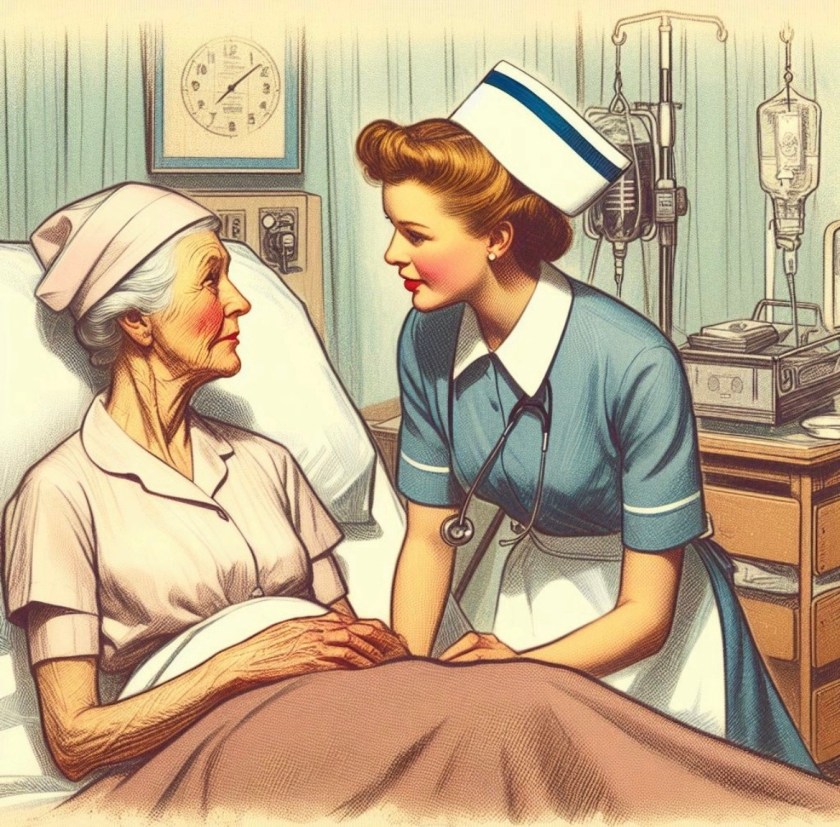
This short story is from Kevin’s NTT on 5/30/24
As I carried her nightly meds down the hall, I looked at the clock: 7:42 pm. Only a few more minutes until the end of my shift. The night duty nurses would be arriving any minute.
I could tell there was something she had been wanting to discuss ever since she was admitted a fortnight ago. I wondered if she’d make it until morning.
I hoped so. I thought she was almost ready.

The medical world of 1962 was filled with promise. Advances in pharmaceuticals, vaccines, and imaging and treatment meant many diseases were no longer automatic death sentences.
But end-stage renal failure was not one of them. And that’s what Mrs. Elizabeth McDaniels, aged 62, was suffering from when I was first assigned to her at St. Mary’s hospital in London.
I’d heard she was wealthy and despite her weakened state, she retained a quiet dignity as she was helped her from her wheelchair to her bed by a pair of orderlies. Her eyes and skin were tinged with yellow and I noticed her ankles were swollen despite her compression socks.
The effort of getting into bed winded her. “I’ll let you rest while I go talk with the doctors,” I said. “Is there anything I can get you?”
She looked at me tiredly. “No,” she said. “But thank you for asking. It’s most kind.” She closed her eyes. When I came back ten minutes later, she was asleep.
The next day dawned clear and bright. It was a beautiful spring morning and I had a cup of tea before heading in to my shift. I wondered if Elizabeth would still be there.
Thankfully, she was; and perhaps it was only the morning sun, but her pallor appeared a bit less yellow. I took her vitals, then fluffed her pillow.
She looked me in hesitation. I could see that there was something she wanted to say; she bit her bottom lip. Finally she spoke.
“Would you…perhaps… have a chance to talk?” she asked. Her voice had an aristocratic accent.
I looked my watch. The ward was slow that morning and I had some time. I pulled a chair next to her bed and sat down. She began to speak.

In 1916, we were struggling in the Great War. Times were difficult, but our wealthy family was largely unaffected. Life at our ancestral home, Heston Grange, continued as though nothing was going on in Europe. Servants waited patiently, the grounds were maintained and the kitchen clattered with the sound of china as meals were prepared. Things pretty much continued as they had for over 200 years.
I was 16 years old. My twin sister, Anne, and I grew up together. We had few other playmates and were very close.
I had many memories of our childhood; riding horses, wandering the grounds and throwing stones into the stream. Our lessons, playing with our dolls and even bathing together. I had a star-shaped birthmark on my hip; our governess, Miss Cooke, told us it meant I was destined for good luck.
It’s a pity that Miss Cooke’s prediction didn’t come true.
In 1917, the United States entered the war. Hundreds of thousands of Americans—or Yanks as we called them—invaded England. They were boorish and brash, but not without charm; a certain savoir faire that was both shocking and intriguing.
The Americans set up a field hospital on the grounds across the stream and day and night ambulances arrived carrying the wounded. Anne and I volunteered as field nurses, assisting the doctors as they tended to their patients. There were terrible injuries: limbs missing, men burned or blinded from the mustard gas.
During a break on an autumn day, we both sat in the rest area, drinking tea. An American captain entered and joined us. As usual, he eschewed the tea and poured himself a cup of hot coffee. In the chill air, a mist rose over his cup.
I looked at him; he was quite the dashing figure in his surgical scrubs and Captain’s bars. He had a three-day beard going but in my mind, it only made him more handsome. He had that rugged, devil-may-care attitude that I found so appealing.
He noticed me staring and also that Anne and I were twins. He sipped his coffee, then set his cup on the little table.
“Good afternoon,” he said with a smile. “Sisters, are you?”
Anne spoke. “Yes, we live on the Grange.” She pointed across the stream and over the field to the manor.
The Captain whistled. “Wow. Beautiful. I imagine it’s been in your family for some time?” He spoke with some sort of accent.
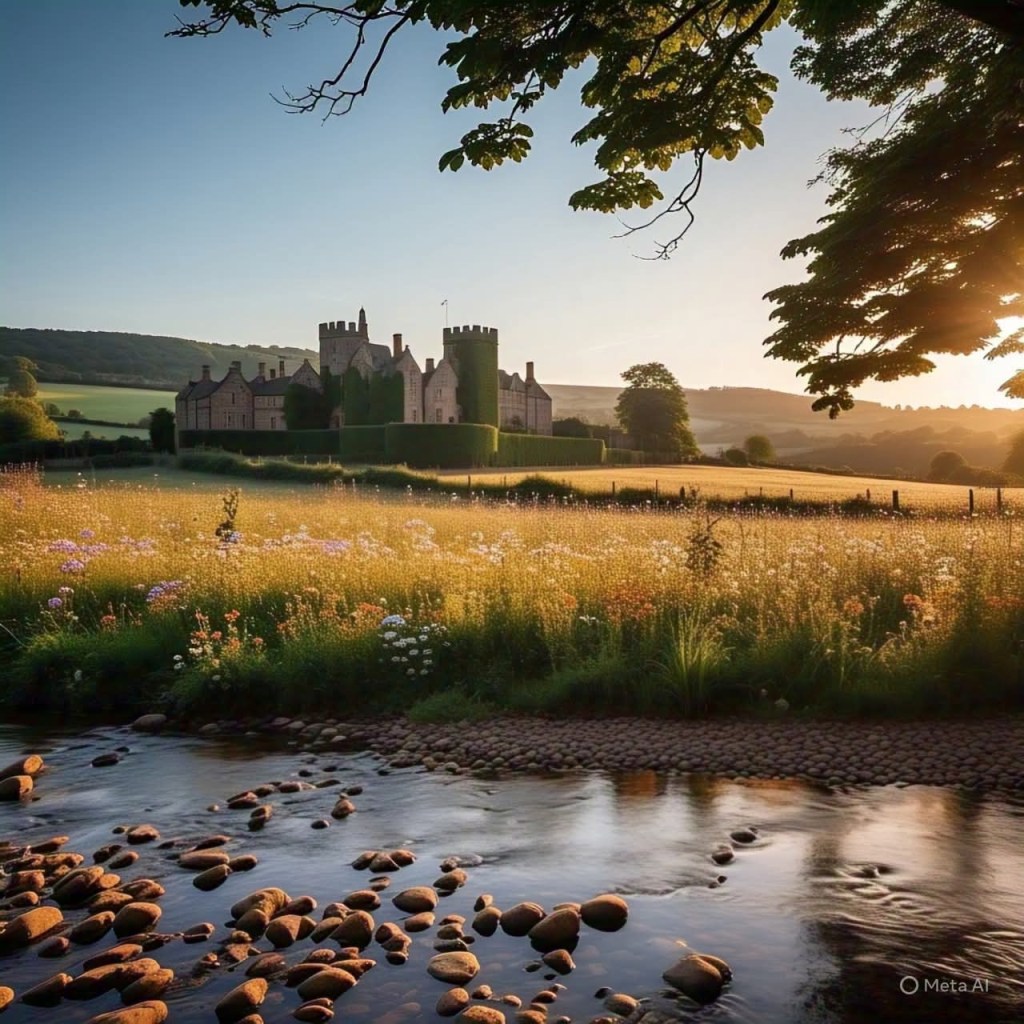
He directed his reply mostly to Anne since she had answered him. His name was David McDaniels and he was from Dallas, Texas. Anne and I had both read books by Zane Gray and were mad about cowboys and the American west.
As he told tales about his family’s ranch, cattle, and roundups, it became mostly a dialog between him and Anne. Although I was also intrigued, Anne’s face was animated as the handsome Captain spoke. After about 15 minutes, he looked at his watch.
“Well, I need to get back to it,” he said, indicating the medical tent. He stood and extended his hand. He said how glad he was to have met us and he hoped he’d see us around. His hand was large and warm. I noticed he lingered longer with Anne and they exchanged a look.
After that, the attraction between Anne and David was unmistakable. She followed him like a lovesick puppy as he went from patient to patient. I was jealous; if only I had spoken first. We were identical twins, wore our hair the same, spoke the same. Why had she captured the handsome Yank’s attention and not me?
One night, Anne invited him to the Grange for dinner. Mother and Father were immediately won over by David, dressed in his dress uniform. All through dinner, he told us stories about America… not only Texas but other places, too.
I couldn’t help staring. He was clean shaven and had a strong jaw and chin. He had blue eyes and black hair and his accent was delightful. He and Anne repeatedly looked at one another and made excuses to touch as they passed things. I could tell they were holding hands under the table.
As the autumn rolled into November and the nights became cold, Father asked David if he’d like to stay in one of the guest rooms instead of the chilly field hospital and David gratefully accepted. His room was on the third floor while our two rooms were on the second.
At night, I heard faint whispering and muffled laughter. I saw under my door the dim light of a lantern late in the evenings. Once, I stole upstairs and listened; I heard moans and low conversation.
In January, David came with shocking news; he was being moved to the front lines where the fighting was heaviest. He would be leaving at the end of the month. We all were saddened.
As his last night approached, I couldn’t help myself. I slipped some of Mother’s laudanum into Anne’s after-dinner sherry and as we sat around the fireplace and sleet tapped at the glass, she became visibly sleepy. We all went up to bed.
An hour later, I snuck into her room. She was sleeping soundly. I took her lantern and tiptoed up to David’s room and for the next hour, I finally experienced what I had been missing all these weeks. In the dim light, David was more handsome than I could have ever imagined. He cried out Anne’s name we both shuddered and moaned as one.
In February, I missed my cycle.
I missed it again in March. In terror, I confided in Miss Cooke. She knew people and on a bleak, gray day in April, I was sent to a home in Sussex for women such as myself. Everyone was told I was feeling poorly and that the doctor felt the sea air would be beneficial.
The summer of 1918 came and brought with it beautiful weather. As my baby grew inside me, I sat by the shore in Brighton under blue skies and warm ocean breezes. The fighting and carnage seemed a million miles away. I wondered how David was doing, I’d heard he and Anne were writing. I agonized over whether I should tell him.
In October, my son was born. He was more beautiful and precious than I could ever had imagined. He had David’s black hair and strong chin—and something else, something startling; a star-shaped birthmark on his hip.
Adoption arrangements had been discretely made by a family on an estate a few miles from Heston Grange, the Sutcliffes, who were unable to have children. I returned to Heston Grange at the end of October; and a week later, the Sutcliffes picked up my baby from the home in Brighton.
David came back in November, only weeks after the fighting had ceased. He was thin and haggard, but we were thankful to have him back. His eyes seemed haunted; I could only imagine what he had witnessed.
He and Anne embraced for what seemed like hours at the base of the stairs; she wept and he held on to her like a drowning man.
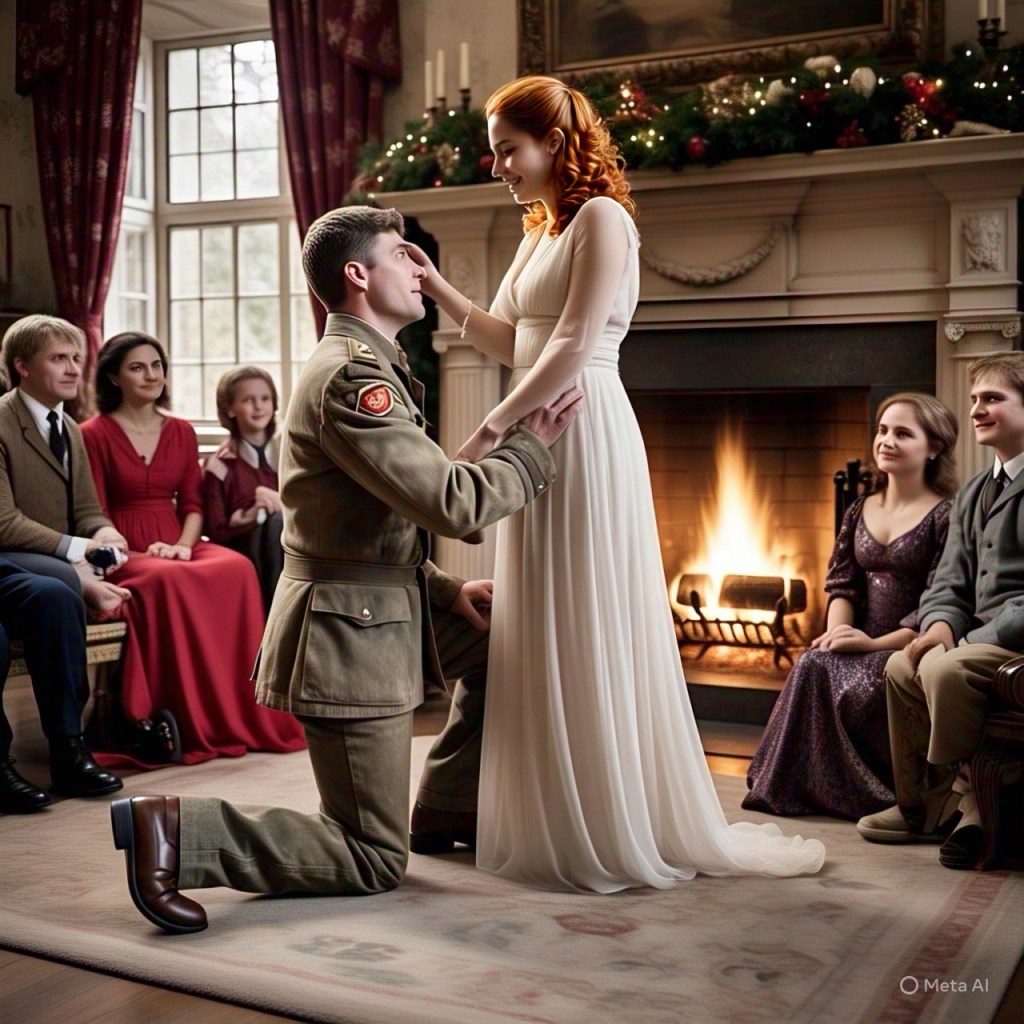
On Christmas Eve, in front of the family and staff, he knelt and proposed to my sister who tearfully accepted. As everyone applauded and wiped their eyes, I drained my glass of port with one swallow and poured myself another.
I visited the Sutcliffe’s as often as I could without arousing suspicion. Nigel, as they called my son, was achingly beautiful. They let me hold him and handing him back was like taking out a piece of my heart.
My visits had rekindled the friendship between Mother and Mrs. Sutcliffe and they began visiting us regularly. I often minded Nigel for hours as they chatted in the drawing room over sherry and at teatime.
David and Anne were married in June and settled into the Grange. Father helped secure David a position in his firm and in December…almost one year to the day of my secret tryst with David… they announced they were expecting.
One day in March, I was away on an errand when Mrs Sutcliffe and Nigel came to visit. I came into the kitchen with my packages and I didn’t see Nigel. They said Anne was bathing him. My heart dropped.
When I walked into the bathroom, Anne had her back to me and she was holding Nigel’s hand as he stood in the tub. She heard me come in and turned. She had a queer expression.
“Elizabeth,” she said. “Come look at this.”
I knelt by her side and she pointed at his birth mark. “Have you ever noticed that?” she asked. I could feel my face growing hot as she gazed at me.
“Oh! Yes— yes, I suppose I have. Noticed it, that is,” I managed to say. I didn’t look at her.
“It looks just like yours… wouldn’t you agree?”
“Oh, I uh— er, I suppose a bit, it does. But I’m sure birthmarks are very common.”
I didn’t turn, but I could feel her gaze on my face for several long awkward seconds. I didn’t say anything as she handed Nigel over to me. “Just finish up with him, would you please? I need to go lay down.”
That evening before dinner, she and David were engaged in a terse, heated conversation in low tones in the library. I lingered by the door but only heard snatches of their conversation. “Your last night.” “Asleep.” “I remember us.”
At dinner, I could feel David and Anne staring at me. It wasn’t hard to put the dates together but there was no proof. It seemed outlandish. After a fortnight, the subject was quietly dropped.
In June, 1920, David and Anne welcomed Jane Penelope to the Grange. Unlike Nigel, she had Anne’s strawberry blonde hair and looked like a miniature version of her mother. She was a darling; the entire house adored her.
The following month, the Spanish flu pandemic descended on the Grange, infecting almost the entire house. The doctor practically lived there as he did what he could.
Most of us became only mildly sick, but Anne seemed to be hit the hardest. In an astonishingly short time, her pallor became a ghastly white, and she struggled for breath. I sat in her room, just the two of us, and held her hand.
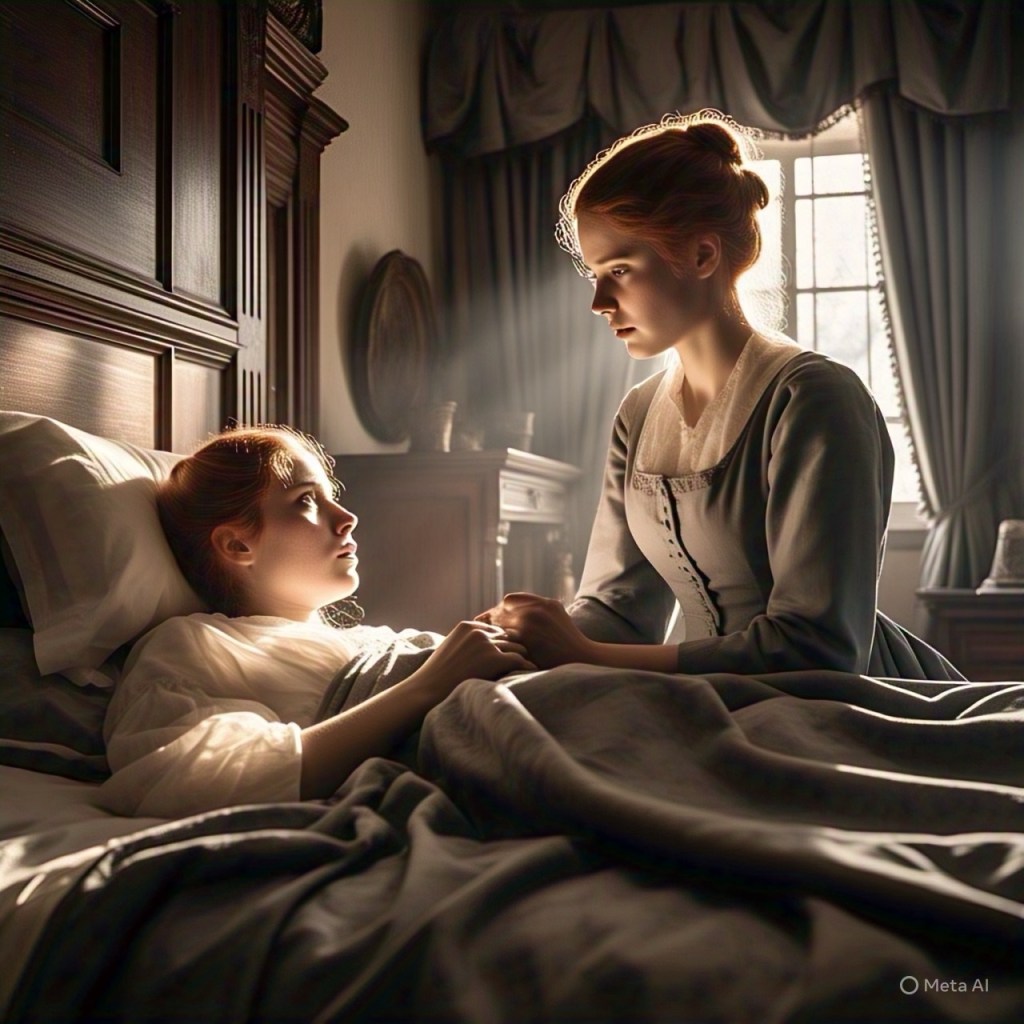
“Elizabeth,” she asked weakly. “I know it’s mad… but Nigel… your birthmark… David… please tell me… did the two of you ever…”
She trailed off in a fit of coughing and looked at me with bloodshot eyes.
“Shhh,” I said softly. “Save your strength. Of course not. I’d never—“
Her face softened and she slipped into unconsciousness. She breathed weakly until 8:30 that that evening, as we surrounded her and the doctor listened with his stethoscope. He finally took the tubes out of his ears and turned; his expression said it all.
I suppose it was only natural that David would turn to me for comfort. I accompanied him on the gloomy visits to the churchyard where only Anne’s stone marked her twenty years in this world.
We sat on the banks of the stream where Anne and I once tossed stones. He talked about not only Anne, but the war, America, Texas, his childhood and family. I never knew he had such a keen wit, an intelligent, lively mind or such deep thoughts. My sorrow for Anne…and my attraction to David …grew as summer yielded gracefully to autumn.
Our affection grew more physical; our hands brushed, then clasped on our walks. Our embraces became longer and more intimate. On Nigel’s second birthday in October, David kissed me in the sitting room and it was a flashback to our first and only night together. But the other things that happened that night in the dim light of the oil lamp also soon resumed.
Out of respect for Anne, we waited a year until July, 1921, to announce our engagement. Once again, there was excitement in the house, but it was tinged with sorrow…and guilt…as I held Jane.
The years drifted by and before we knew it, a decade and a half had passed. Storm clouds were again threatening in Europe—and much closer to home. I began to grow alarmed as Nigel, 19, and 17-year-old Jane were clearly becoming more than childhood friends.
It was like turning the clock back as they stole kisses and walked along the stream, tossing stones and holding hands. Once, I crossed the field to sit with them on the bank; just as I got there, a cloud drifted off the sun.
In the light of the late-afternoon sunbeam, Jane’s hair shone coppery red, the exact shade as her mother, and Nigel’s profile and black hair were identical with David’s. I don’t know how nobody ever noticed. Or at least noticed and didn’t keep still.
My heart ached. There was no way they could have a future together.
In September 1939, Hitler invaded Poland and the world was again plunged into war. It was a horrible Deja vu as young men, including Nigel, were mobilized all over Britain and Americans began arriving again en masse.
Nigel astonished everyone by proposing to Jane that Christmas. It came as a complete surprise to David and I because, unlike David, he had not sought her father’s permission first; I suppose everyone chalked it up to a “madness of wartime” event. Still, I could never approve the marriage of a girl to her half-brother. The wedding date was to be set at some other time.
David and I worried as Nigel undertook the Commissioning Course and emerged as a second lieutenant in October, 1940. Our worry turned to anguish as he was deployed to intense fighting in and around Southern Italy.
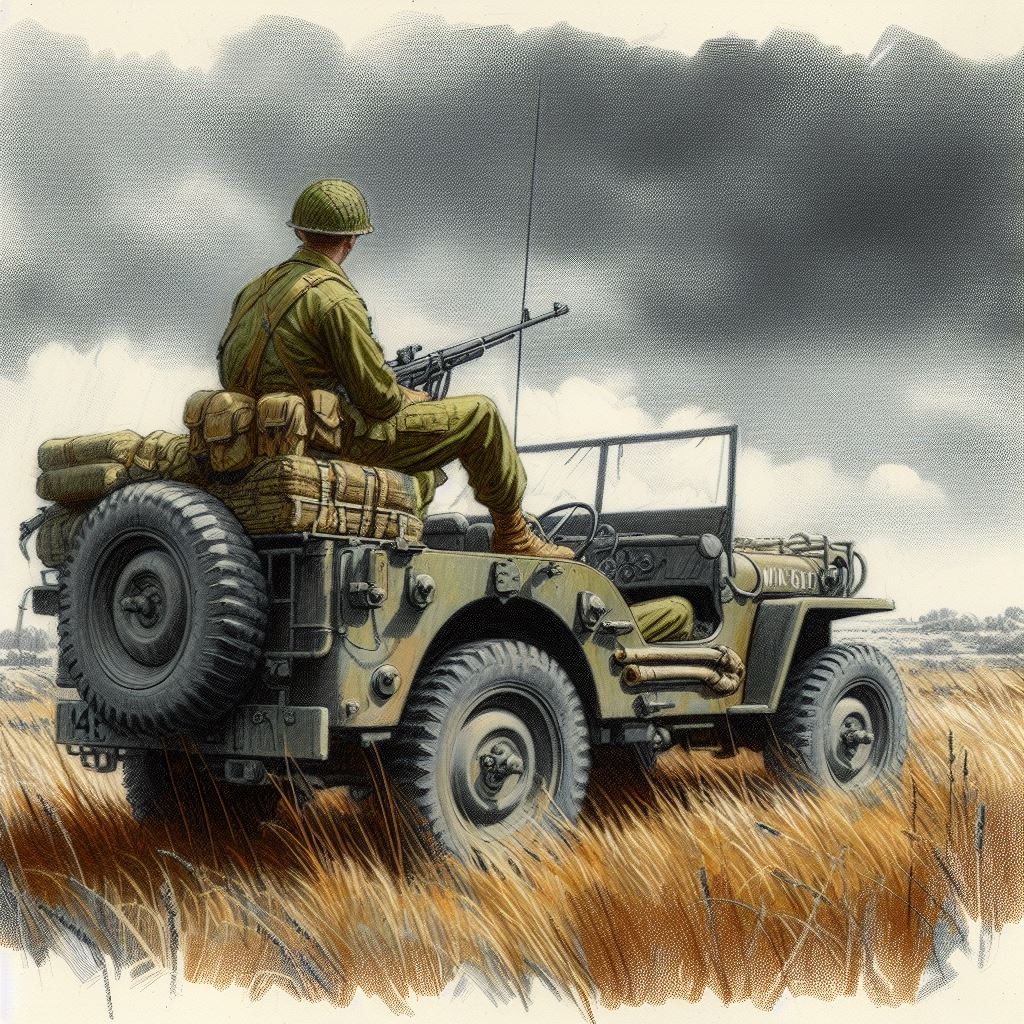
Jane moped around the Grange, reading Nigel’s weekly letters and sighing with worry. She took walks alone by the brook, merely sitting, arms wrapped around her knees. David and I also worried, me perhaps more because of the secret I carried.
The worst happened in March 1942 when we received word that Nigel had been wounded while leading a charge on a German position. The details of his injuries were not specified; only that they were not life threatening and that he’d be returning to the UK in a few weeks.
One rainy afternoon, soon before Nigel was to arrive, a letter arrived for Jane. She took it into the sitting room to read it. After several moments she burst out of the room in tears and ran up the stairs. Her door hollowly boomed in the distance.
I went into the sitting room; the letter was on the table by the window. I picked it up and my eyes darted across the page.
17 April 1942
My Darling Jane,
As you heard, I was injured in the fighting. My injury is not debilitating or horrid in appearance; you’d never know anything was amiss. But while I still command almost all the faculties that would allow us to enjoy the full physical pleasures of man and wife, I lack one: I can never have children.
We’ve often discussed our plans for our future family during our afternoons by the stream; I know how much you were looking forward to the next generation at the Grange.
But inasmuch as I cannot fully give myself to you, to our marriage, I am releasing you from our engagement. I’ll return to my parent’s estate after I collect my things.
I hope you don’t hate me for this; I only want you to be happy and fulfilled. I hope you find someone else with whom you can build a life.
All my love,
Nigel
I put my hand to my mouth: Oh dear God.
A jeep dropped the twice-promoted Captain Nigel Sutcliffe at the entrance to the Grange late in the afternoon in early May. Like his father 20 years ago, he looked thin and haggard. The servants took his duffel bag as he embraced David, then me.
He looked around. “Where’s Jane?”
A voice came from the head of the stairs. “Here I am,” she said.
We all turned. She was dressed in the same outfit that she wore in the night of their engagement and as she descended, I could see the effect was not lost on Nigel. He swallowed several times.
“Welcome home,” Jane said as she wrapped her arms around his neck. They embraced and kissed until he broke it off.
“Sweetheart,” he said. “Did you not get my letter? I wrote—“
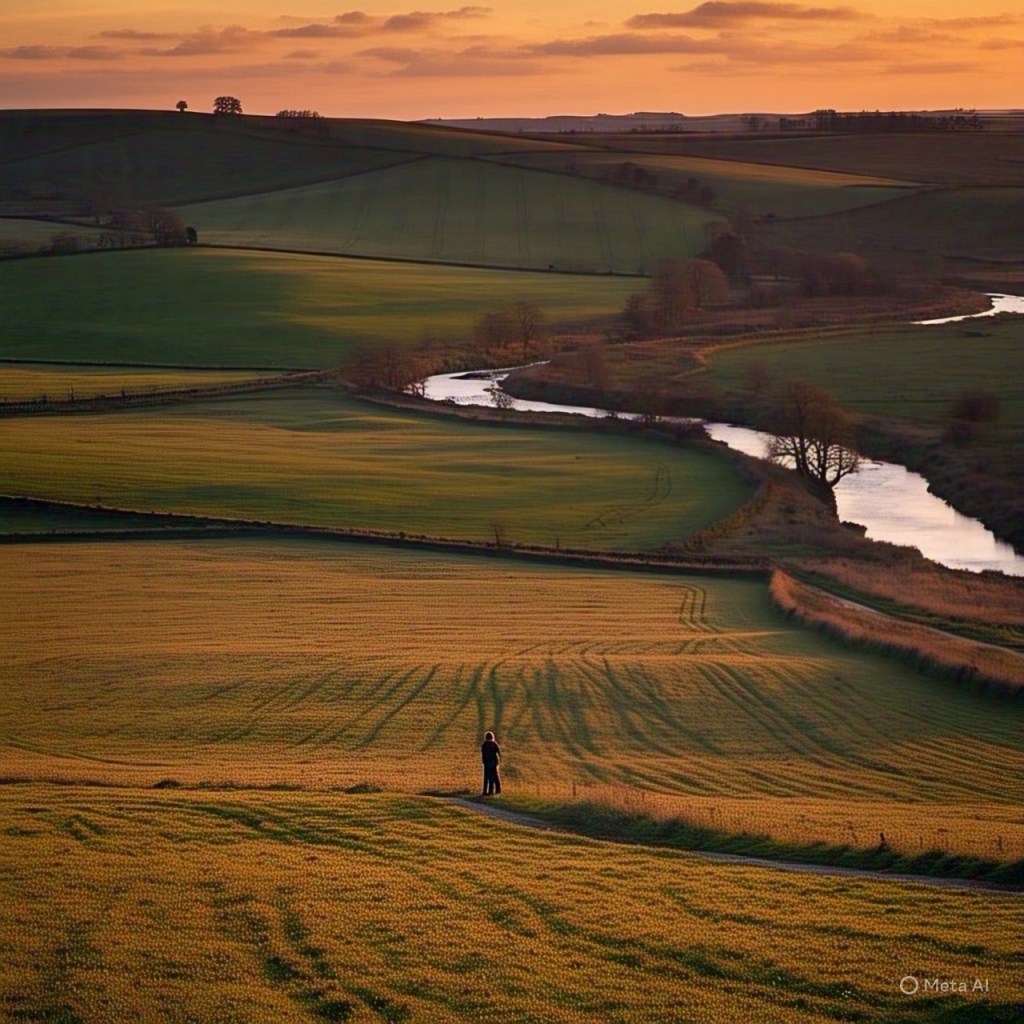
He was cut off as she held a finger to his lips. “Let’s go take a walk.” Before he could protest, she had him out the door by the hand, leading him across the fields toward the stream.
For the next hour, David and I took turns watching them through binoculars from our second-floor bedroom. They paced, shouted. Hands were held out placatingly or flung overhead in frustration. Stones were flung angrily into the stream and Nigel ran his hands through his hair angrily.
Finally, they faced each other, chests heaving, at an impasse. Almost a minute passed until Jane reached for his hands. They melted into each other’s arms as the lengthening shadows yielded to dusk.
Their wedding was that September and they took up residence in Anne’s childhood room on the second floor. It was strange having my son and my niece living one floor down from me.
Once again…just like twenty years earlier…the war seemed far away from the Grange. It ended in 1945 and the years passed pleasantly by as Nigel and Jane adopted first a boy, then a girl. It was good to hear childish shouts of joy and laughter in the hallways; it reminded me of my childhood with Anne and Miss Cooke.
David and I enjoyed our roles as grandparents. Christmases especially were wonderful as the Sutcliffes stayed through the holidays and the staff made the season bright. Another decade flew by.
On a warm August afternoon in 1957, David and Nigel were riding in the fields to the north of the Grange. A pheasant bursting from cover spooked David’s horse and he was thrown, breaking his neck. He died instantly.
That night, I had a dream; it was a frigid January night in 1918 and I was sneaking up to David’s room. The oil lamp cast long shadows down the hallway as I reached for the knob. I heard Don’t… stopped, turned, and saw David and Anne looking sadly at me. I awoke in a sweat.
We buried David next to Anne in the churchyard. I had never planned to tell him, but now the irrevocable decision had been made for me; it made it easier, somehow.
She finished at last and laid back, exhausted. I mopped her fevered brow.
“Tell me,” she said, searching my eyes. “I know my time is short. I never told Anne. Or David.” She looked agonized as the secondhand swept silently around on the wall clock.
“What would you do?” she finally asked. Would you tell them? Do they deserve to know…? Or would you let it be?”
I hesitated, then leaned over and whispered into her ear. She nodded and smiled. Within a minute, she was asleep.
The next morning, Nigel and Jane came with a bouquet of flowers. Elizabeth McDaniels smelled them with a smile, then motioned for them to shut the door. She caught my eye and smiled faintly.
I attended her funeral the following week on a rainy Thursday afternoon. Other than myself, Jane and Nigel, there were only a handful of attendees.
As I faintly heard the minister recite the twenty-third Psalm, I gazed at the framed photograph of her that sat on top of the coffin. Perhaps taken in the mid 1930s, she was stunningly attractive.
Would you do it all the same? I wondered.
In the pattering of the raindrops on the canopy, I thought I heard her answer.
© My little corner of the world 2025 | DarrylB | All rights reserved
 My little corner of the world
💝
LikeLiked by 3 people
Thanks, Matea 😎
LikeLiked by 1 person
Always
LikeLike
What a sweeping story of love, betrayal and secrets. This is written beautifully, and I was invested in all the characters. I loved this.
LikeLiked by 2 people
Lisa, thank you for such a kind comment and for reading. I know it was long, but I couldn’t find a way to remove anything without diluting it. Much appreciated 😎
LikeLiked by 1 person
I really love this story! I especially like the historical references that you weaved throughout the story. I really look forward to your stories! Thank you Darryl for taking the time to write!
LikeLiked by 2 people
Thank you! I appreciate you reading and leaving such a nice comment 😎
LikeLike
Well-done. Its hard to write a short story with this kind of scope.
LikeLiked by 2 people
Thanks, Joyce! I’m glad you liked it. I tried to cut out some parts…but it felt really thin, like someone skimping on the pizza tomato sauce 😂 Thanks much for reading and the kind comment 😎
LikeLike
D
LikeLiked by 2 people
Thanks! I’m glad you enjoyed it! Thanks much for reading and commenting 😎
LikeLike
Nice post! If you wouldn’t mind, subscribe for very cheap to our blog at the homepage neuralaym.com for unique neurological tales! Save over $20,000 then you would in college or at the doctor’s office by subscribing today for only $3!!
LikeLiked by 4 people
I believe I’m already subscribed!
Thanks for reading and commenting 😎
LikeLike
I appreciate that!! But, you don’t have the full subscription!! Consider it to gain the maximum amount of info!!
LikeLike
Brother this was breathtaking. You pulled me in from the very first line and held me there, heart aching and eyes wide.
LikeLiked by 2 people
Thanks, brother! I think I got a little carried away… but I couldn’t seem to find stuff to cut without making it flat. Appreciate the kind words and for making it to the end 😂😎🙏
LikeLike
WOW!! More please!
LikeLiked by 2 people
Thanks so much! I’m glad you liked it 😊 Thank you for reading and leaving such a nice comment 😎
LikeLiked by 1 person
Another brilliant story. I just love your writing. Such depth and perception.
LikeLiked by 2 people
Thanks, Violet. I’ve had Kevin’s nurse picture in my “NTT TBR” (actually To Be Used) file for a year. Didn’t mean to write such a novella, but I had a hard time cutting out stuff… guess that’s what an editor does 😂
Thanks much for reading and the kind words 😎❤️
LikeLiked by 1 person
I love when a story runs its natural course. I read books so a full length fiction piece is a pleasure.
LikeLiked by 1 person
Thank you, my friend 😎
LikeLiked by 1 person
Amazing!
LikeLiked by 2 people
Thanks, CJ! I’m glad you liked it. Thanks much for reading and the nice comment 😎
LikeLiked by 1 person
This story is captivating, Darryl, with solid characters and touching circumstances.
LikeLiked by 2 people
Thanks, Tim! I’m glad you liked it. Thanks much for reading and the nice comment 😎
LikeLiked by 1 person
My pleasure, Darryl. 😊
LikeLiked by 1 person
Booooo
LikeLiked by 2 people
It looks like you wanted a different ending? 😉
LikeLike
No what I meant is shame on you for using generated images. Boooo
LikeLiked by 1 person
Great story, Darryl, and it poses so many questions. What a tangled web people are capable of weaving … 🙂
LikeLiked by 2 people
Thanks, Laura! Yes, as we’ve discussed, kinda fun being the puppet master and having your characters “doing this and signing that” (Mick)… Elizabeth a bit out there but thought it set up an interesting crisis 😉
Thanks as always for reading and comment, my friend. Hope you have a great rest of your week 😎
LikeLiked by 1 person
It certainly did that, and you resolved it well. The human ability for behaviour not considered ‘correct’ and the far-reaching consequences it can have are well-illustrated here, Darryl. Thanks for sharing it. Have a good week yourself. 😊
LikeLike
Your engaging prose always hits the mark, Darryl, but kudos on the meticulous, vibrant presentation.
LikeLiked by 2 people
Awww! I am humbled my friend, this coming from you. Thanks much for reading and commenting… very much appreciated 😎
BTW, am enjoying your book!
LikeLike
Another home run, brother. Excellent as always 👏👏👏
Please accept my sincere apologies for the late reply. My presence has been limited these days.
LikeLiked by 2 people
Brother, no explanations needed….I’m glad you’re OK!
What’s the radio silence with our favorite nurse? All OK there?
LikeLiked by 1 person
Oh, yes. I’m fine. Just not “talkative” these days.
She’s ok too. She’ll probably be posting an update in a day or two. Just been lots going on the past few weeks.
That said, she’s alive and well too. 😊
LikeLiked by 1 person
Dude, am so glad to hear that. Looking forward to two periscopes popping up this week! 😎
LikeLiked by 1 person
Hey…I never said I was gonna post. 😄😄😄
LikeLike
This could be a lifetime movie!! It has everything, love, secrets, scandal, betrayal and family bond. What a remarkable story.
LikeLiked by 2 people
Thanks, Rojie! Appreciate you reading and commenting. I’m glad you liked it!😎
LikeLiked by 1 person
Now you’ve gone and done it! My eyes are leaking, my nose is leaking, and the lump in my throat threatens to cut off my air supply! That’s quite a feat; this crusty ol’ curmudgeon rarely has such an experience! Thank you for sharing this beautiful story!
LikeLiked by 2 people
Thanks, Ol’ Big Jim! Didn’t mean to get all those things going 😉
Thanks much for reading and the nice comments. Much appreciated! 😎
LikeLiked by 1 person
Wonderful Post 🧡❤️💝
God bless you 🏵️
Grettings 🌎🇪🇦
LikeLiked by 2 people
pk, thank you for such a kind comment! I’m glad you enjoyed it…thanks for reading 😎
LikeLike
A tearjerker!
LikeLiked by 2 people
Don, I’m so sorry about the delayed response… I was off WP for about a week and somehow missed your comment.
Thank you for reading, and your kind comment… Much appreciated. I know that was a bit of a long one.
Hope you have a wonderful Memorial Day! 🙏🇺🇸
LikeLike
What a beautiful story! Speaks directly to the heart ❤
LikeLiked by 2 people
Maria, I’m so sorry about the late response… I was off WP for several days.
Thank you much for the kind words and taking the time to read it. I know it was a bit long.
Hope you have a wonderful Memorial Day! 😎🇺🇸
LikeLiked by 1 person
Groovy Story! Has a great hook, it kept me posted. Well done! 🏄♂️
LikeLiked by 2 people
Thanks, Chuckster! I’m glad you liked it, I know it was a bit in the long side. Thanks for reading and commenting… much appreciated! 😎
LikeLike