


This is my first foray into the world of historical fiction. My fellow blogger Kevin put up his usual assortment of incredible digital art last week for No Theme Thursday and one of the images inspired me. It’s mainly factual but I took a little creative license in a few parts to make the story more relatable.
I hope you enjoy it…constructive criticism always welcome 🙂
I was the first child born in Ward County, North Dakota, at the turn of the century in 1900. It’s not really surprising given our county had less than 2,000 people; but I was featured in the January 1, 1900 edition of the Minot Times. Edwin Eugene Aldrin made a grand entrance to the Peace Garden State.
I grew up on a wheat farm several miles outside Minot and my earliest memory was the wind. It was an endless moaning presence that moved the wheat fields like waves on the sea.
One other thing stands out with vivid clarity; the stars at night. Mom used to read from the Bible after supper and the part where God promised Abraham he would have more descendants than the stars in the sky struck me profoundly.
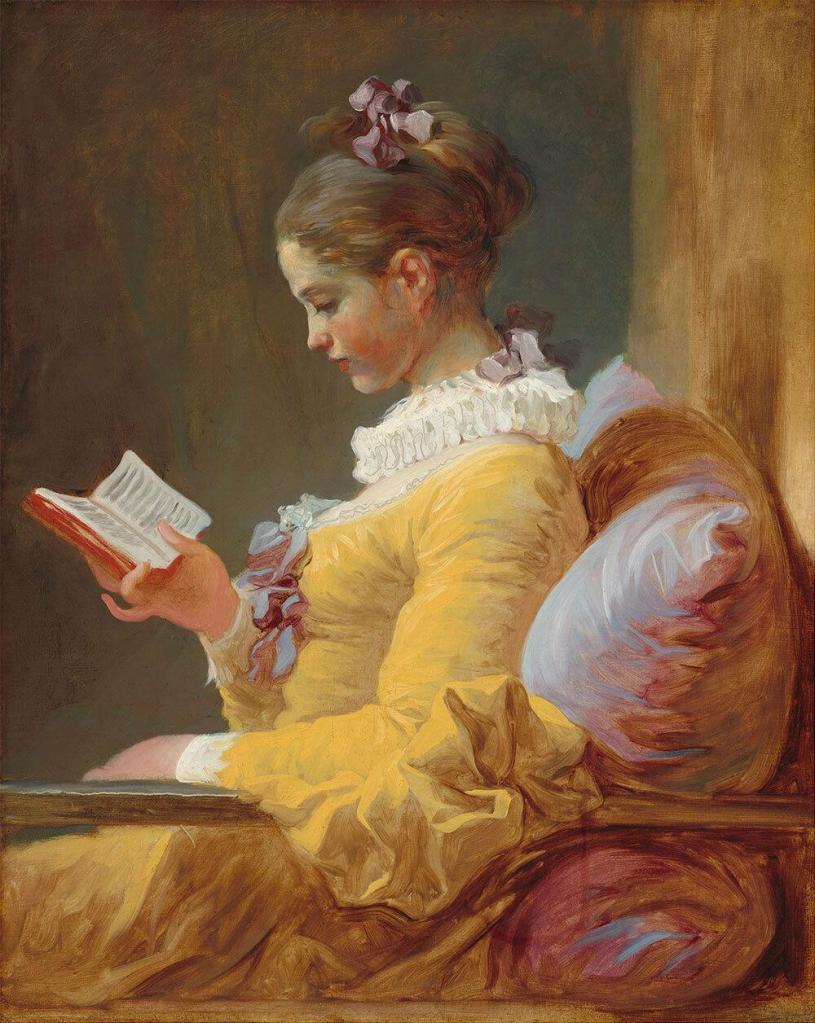
I had a book with star maps and the constellations and I learned the names of them all. On moonless nights, my favorite thing to do was lay on my back and look up at the inky heavens as the whip-poor-wills called.
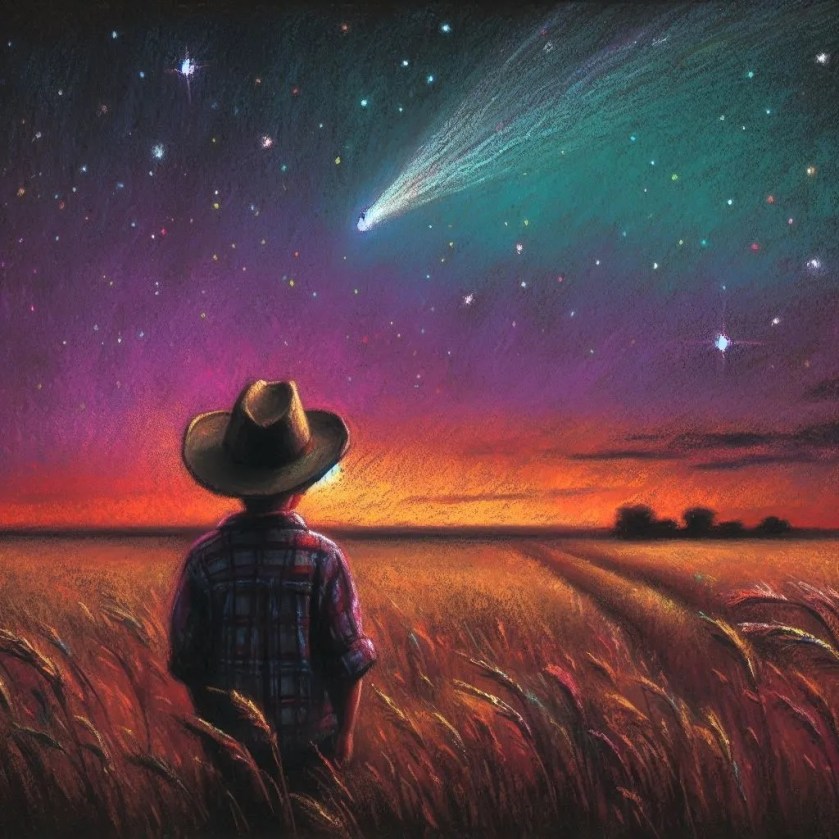
When I was ten, something astonishing appeared in the twilight sky: A long ghostly streak that grew brighter each evening. The Minot Times covered it extensively; it was called Halley’s Comet.
Dad came out with me on May 8, 1910, the night it was brightest. We stood together, silently. Dad spoke. “What do you think?” he asked. Without looking at him I answered; I’m not sure where the words came from. “I think flying is just the beginning,” I said. “I think someday we’ll reach the stars. I think I’ll reach the stars.” I could feel him looking at me.
###
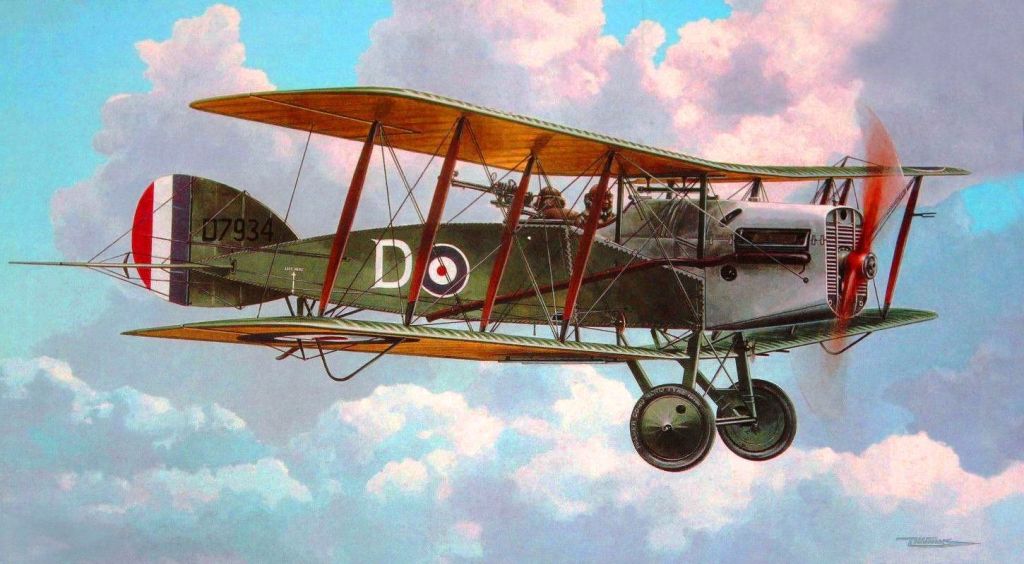
In WWI, I flew a Bristol F.2 in the skies over France; my 5th kill made me an ace. Flying home that day, I took the Bristol as high as she would go; the altimeter pegged out at 20,000 feet but I went much higher than that. It was just God and me. I thought about Halley’s Comet and space…so close I could almost stick up my hand and touch it. Some day, I thought.
###
My dreams of a career in aviation ended on my last flight when I suffered an ear injury. The flight surgeon looked at me sadly. “I’m sorry, Aldrin,” he said. “You’re going to have episodes of vertigo the rest of your life. Your flying days are over.” I was crushed.
I’d had enough of the endless North Dakota wind and took a job in Glen Ridge, NJ. When Lindbergh soloed the Atlantic in 1927, I rejoiced. But I was also envious. What must that have been like, I wondered.
Edwin Eugene Aldrin, Jr, entered the world on a cold, clear January day in 1930. He inherited my love of astronomy and aviation and we spent many nights in the field behind our house. As we looked through my telescope at the vault of heaven, he peppered me with questions: How far away is Jupiter? How long does it take Saturn to orbit the sun? Why is it called the Andromeda galaxy?
Nothing gave me more pleasure than those hours, introducing the cosmos to my son. I thought sometimes about Mom and her Bible and Abraham’s descendants. I thought about Dad and I and that night in the field so many years ago. It never got old.
When he was older, we started hanging around the local airfield. I taught him about flight, filling him with dreams, dreams I once had. And when he earned his pilot’s license at 16, I was proud as could be.
###
“What do think about a military career for me?” he asked me one day. “I was thinking West Point. Then move to the Air Force.” This was 1948 and we were at peace; and the Air Force Academy would not be established for another six years. No alarm bells.
“Yes, I suppose that would be good,” I said. “There’s also Annapolis and Naval aviation.” He laughed. “Dad,” he said. “You know me.” I’d forgotten; since boyhood he had suffered from seasickness.
Buzz graduated third in his class from West Point in 1951 with a degree in Mechanical Engineering. He joined the Air Force and became a fighter pilot, flying an F-86 fighter in Korea. He downed two enemy MiG fighters and was awarded the Distinguished Flying Cross.
###
He came for lunch one day in 1962. While the table was being set, we had a beer on the porch. “Dad,” he said. “You’ve heard about NASA?” I nodded; the space program had been founded four years earlier.
“I’m thinking of joining. I’ve got enough flying hours and my doctorate in aerospace engineering gives me an edge over the other guys.” He looked at me. “What do you think?”
What did I think? I was a mixture of emotions, jumbled thoughts, images and snatches of remembered conversations. Alan Shepherd had just ridden an 80-foot, 33-ton flying bomb into space the year before, a 15-minute flight. And just last month, John Glenn became the first American to orbit the earth. It was all starting, what I had envisioned half a century before.
I looked him earnestly. “Buzz,” I said. “It’s all new. There’s danger. But there’s also fantastic opportunity. Is this what you really want?”
“Yeah, it is,” he said. “Your story about you and Grandpa and Halley’s Comet. All our nights in the backyard. Soloing. Flying fighters.” He rose from his chair and I followed. “I want this so bad I can taste it.”
I embraced him tightly. Things blurred for a second as the years fell away. Maybe I was never gonna make it into space… but my son would. I held him by his shoulders and looked him in the eye. “Then go do it, son,” I said. “And may God go with you.”
###
Seven years later on a humid July morning in Florida, I sat in the VIP observation section of Cape Canaveral. In the distance, on launch pad 39A, my son and two other astronauts sat strapped atop a 33-story rocket.
As the countdown proceeded, my palms grew sweaty. This was no 15-minute ride, or a simple orbit of the earth. My son was going to another world.
The countdown clock reached 0:00 and the bottom of the Saturn V erupted in flame. I looked at my coffee cup; the rumbling from four thousand tons of thrust made it quiver and quake. I could feel it in my seat, in my hands.
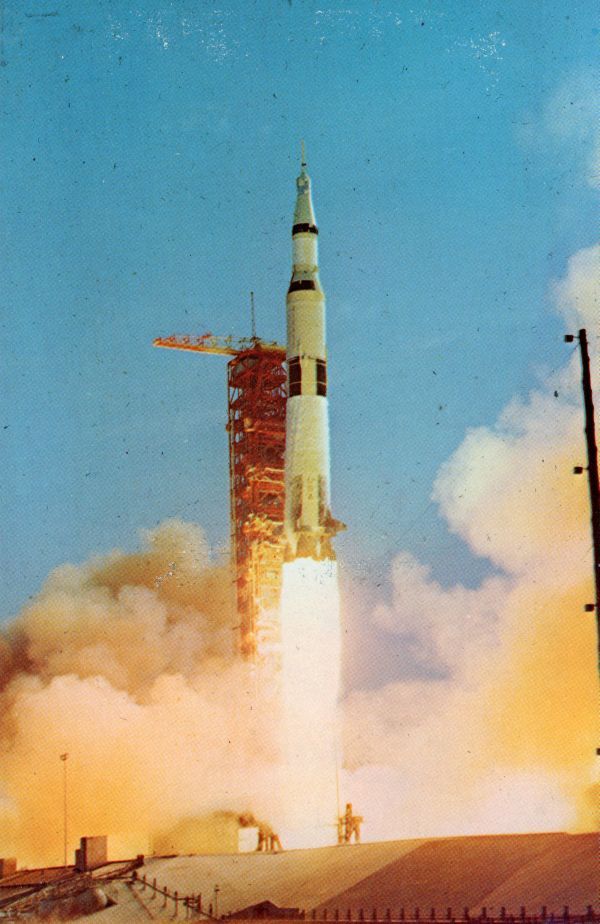
Slowly at first, but rapidly gaining speed, the six-million pound Apollo 11 rocket lifted off the launch pad. It cleared the gantry and rose faster and faster, burning 29,000 lbs of fuel per second.
I watched the telemetry board. When Buzz was 42 miles high, going 6,000 mph, the first stage ejected. We saw a distant flash, then more smoke as the second stage kicked in. After that, they faded from sight, but my eyes were glued to the board. I thought about my flight in the Bristol 51 years ago and the enormity of what I was watching.
###
I also knew a secret. Buzz had told me he was smuggling aboard a Communion wafer and a tiny container of wine. He was going to celebrate communion on the moon.
The Eagle landed on Sunday, July 20, 1969. And as Buzz celebrated on a different world, I celebrated at a church in Cocoa Beach. I felt a mystical connection, a sense of order, a loving benevolence spanning space and time…and a promise made long ago.
Mom’s face came to mind. Bathed in the light of a kerosene lantern, she read: In the beginning. Darkness divided from light. Greater and lesser lights.
I’d like to think she was watching.
And cheering on her grandson, who now numbered with those starry descendants.

The birthdate and place of Edwin Aldrin, Sr, are fictional, as is the type of plane he flew in WWI, his five kills, ear injury, and Buzz getting his pilot’s license at 16. The rest of the story is factual.
©My little corner of the world 2024
 My little corner of the world
Communion on the moon! ❤ Yes.
LikeLiked by 1 person
Art, Buzz later gave an interview to Guideposts magazine. “I poured the wine into the chalice our church had given me,” he said. “In the one-sixth gravity of the moon, the wind curled slowly and gracefully up the side of the cup. It was interesting to think that the very first liquid ever poured on the moon, and the first food eaten there, were communion elements.” 😎
LikeLiked by 1 person
Then I shall dream😊
LikeLiked by 1 person
Thanks for reading and commenting 😎
LikeLike
This was so interesting, definitely write more historical fiction in the future.
LikeLiked by 1 person
Thanks, Pooja! Appreciate you reading and the kind comments 😎
LikeLiked by 1 person
Always a pleasure!
LikeLiked by 1 person
You know what I hate?
I hate that you are so damned good at this. 😄
On a serious note, it is truly excellent. You are one hell of a talented writer, Darryl. 👏👏👏
LikeLiked by 1 person
Thanks, Kevin. Your artwork is really the catalyst…I’ll be sitting there with nuthin’…dang… all of a sudden here come a dozen pix, one or two invariably snap a story into my brain 😎
LikeLiked by 1 person
Glad for whatever part I play. Thank you, Darryl. That truly means a lot to me. 👊
LikeLiked by 1 person
Dude, I think all the WP community needs to meet some day for some wings and pitchers 😎
LikeLiked by 1 person
That would be a grand party indeed! The painful part would be deciding where 😄
LikeLiked by 1 person
This is a great take on how things just might have been, Darryl. As I read it, I couldn’t help but thinking that it would make a fantastic basis for a screenplay. Have you ever considered writing one of those? You certainly have the talent.
LikeLiked by 1 person
Thanks, Terry! It’s Kevin and his artwork that get me going. I had Covid about a month ago and all my creativity dried up… but when I saw that pic, the story popped into my head.
Thanks again for the kind words and for reading ❤️😎
LikeLiked by 1 person
I was so engrossed in your story from beginning to end. It’s really good!
LikeLiked by 1 person
Thanks, Kymber! Appreciate you reading and commenting 😎
LikeLiked by 1 person
What a cool story!
LikeLiked by 1 person
Thanks, Dawn! I was fun writing about something that was factual (mostly) but as I imagined it. Appreciate you reading and commenting! 😎
LikeLike