


The December sun was bright in the frigid morning air. My youngest daughter, myself and the instructor were scraping ice off the wings of a small plane in preparation for takeoff. I thought about the jet years ago that took off with icy wings from Reagan International airport and promptly fell into the Potomac.
I hoped we didn’t miss any spots.

One of my jobs as a dad is to expose my kids to as much cool stuff as I can….I never know when something that we might hit upon becomes a lifelong passion.
So far with with my youngest, Kari, the piano, pets and writing have been a good fit. Sailing, art and surfing, less so. But she’s always been interested in a vague sort of way about aviation; perhaps this is because she thought the world of my pilot-father and his stories about flying. Or because it’s from the times we’ve sat at the observation deck at the local airport, listening to the chatter between the planes and the towers, and watching planes take off and land.
I made some inquires at the local airport and found out they offered a’ “Discovery Flight” package of one hour of ground school and one hour of flight time. I presented her with the certificate at her 15th birthday and the hug she gave me that sort of closed off my airway for a few seconds told me it was a hit.
She was a good student, diligent, and paid close attention during the ground school portion. The instructor covered the principles of flight: lift, thrust, drag, weight. He talked about ceilings, the NATO military alphabet, flight plans and the protocols for receiving instruction from the tower and take offs and landings. Kari was enthralled.
Following ground school, we followed our instructor out to our plane for the pre-flight inspection. We walked completely around the plane, visually assessing the condition of the aircraft. We took a sample of the aviation fuel to make sure it was free from water. The instructor commented that the wings had ice; the previous night was in the low teens. He wordlessly got out three plastic ice scrapers from the plane and we went to work.
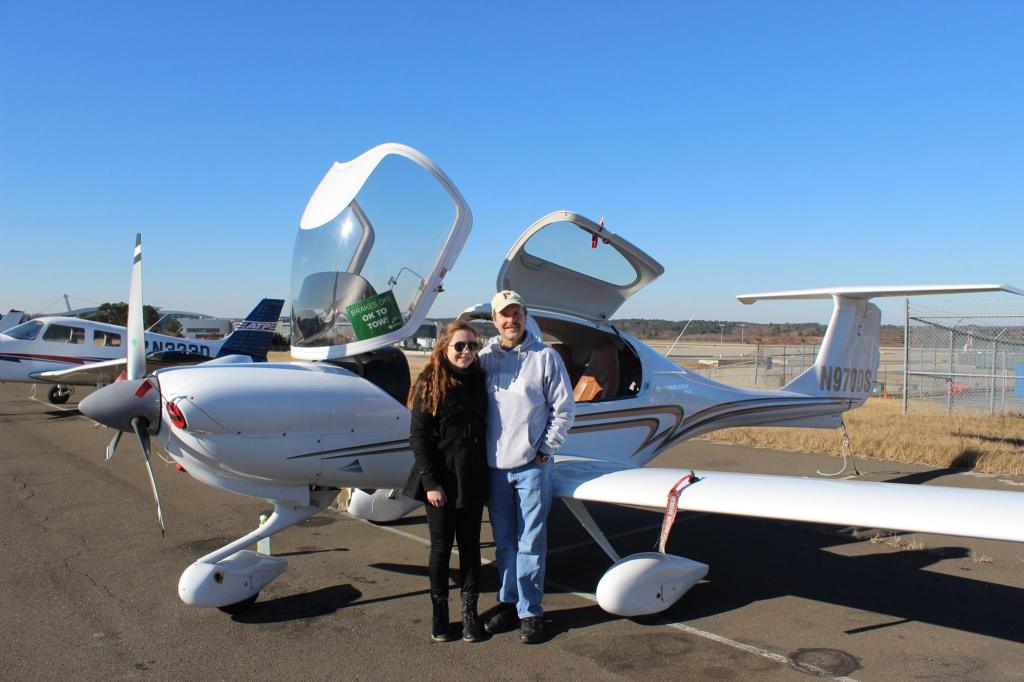
When he was satisfied, I climbed in the back, and he installed Kari in the pilot’s seat. He reviewed the instrumentation with her, which was all digital. This was different from my flying days with Pop where some of the instrumentation was analog, like a dial that showed altitude. He put on her headphones, did a mic check, then established contact with the tower. He turned on some knobs and switches, and finally the engine. The familiar fluttery rush of the prop wash announced we were underway.
We taxied to the end of the runway. This was not a country airfield, it was Raleigh-Durham International (RDU) airport. The control tower squeezed us in between arriving and departing flights of 737s and 757s. We needed to be mindful of the swirling turbulence they left in their wake, which could last up to a minute. Getting caught in one of these vortexes could have disastrous consequences.
We were finally cleared for takeoff. He took us off mic, told Kari what to say to the tower, then put us back on mic. She said what he told her, and the tower squawked back. She turned to me and grinned.
The pilot performed the actual takeoff. He took his foot off the brakes, pushed the throttle forward, and we picked up speed, hurtling down the runway. I noticed big black streaks from the tires on the big jets. He pointed out various instruments to Kari.
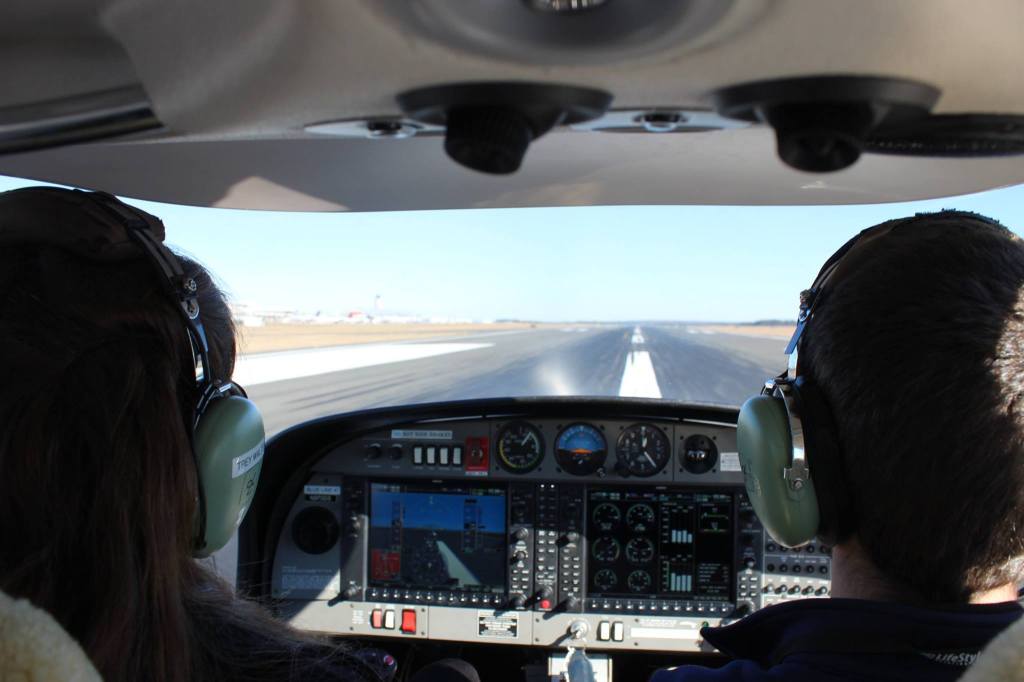
My stomach lurching told me we had left earth and as I looked out the window, the ground fell away. I had a bird’s-eye view of the terminals, the tower, the aviation buildings and the FedEx hub. I saw the morning sun glinting off a frozen lake behind RDU.
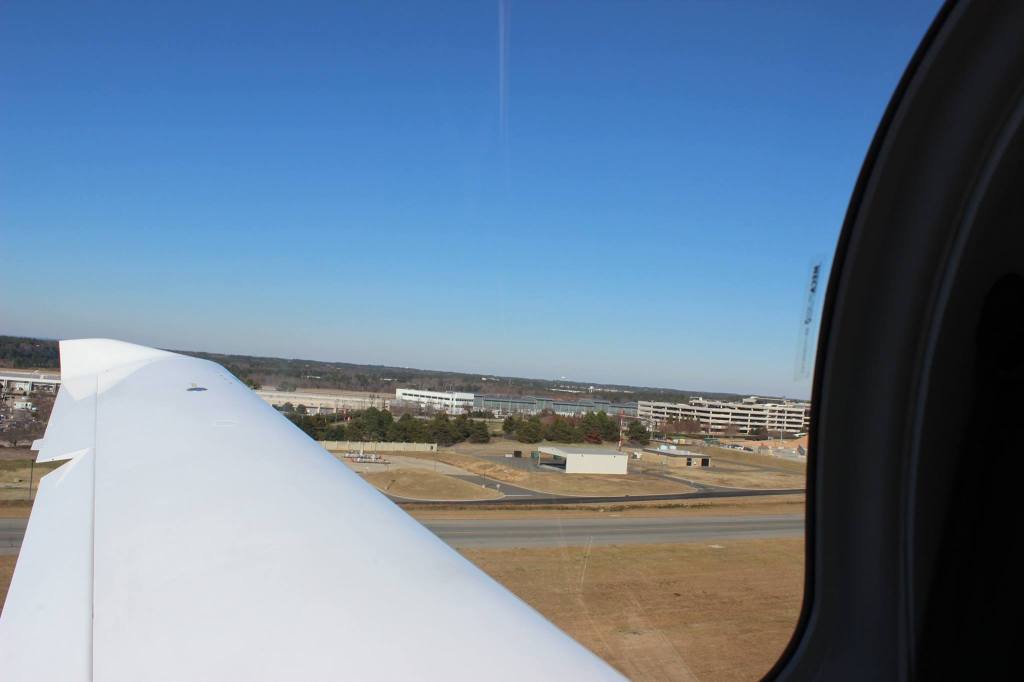
Our destination was Smithfield, a small airport about 50 miles from RDU. I could see the instrumentation; airspeed, 150mph, altitude, 4,000 feet.
There are six main controls to an airplane. Pulling back on the wheel makes you go up; pushing forward makes you go down. Turning the wheel left or right makes you bank left or right; and stepping on the left or right rudder pedal helps you turn in the desired direction. It’s a lot of coordination, but Kari seemed like a natural and as the instructor told her to climb or descend, to go to this heading or that, it appeared to come instinctively.

We reached Smithfield, and shot several landings; ie, we landed, immediately took off, circled the field, and did it again. In each case, the pilot did as little as necessary on his dual controls; it was largely Kari doing the flying. She turned to me a few times and beamed.

Heading back to RDU, the pilot and Kari got into a discussion about aviation; the types of private planes, the different licenses, the costs of ground school and requirements for certification. He had his own assortment of flying stories and Kari laughed and nodded, her headphones going up and down.
No doubt this adventure was a hit. As I gazed out the window, watching the fields and NC countryside pass by in the thin December light, I distinctly felt the presence of my dad in the back with me, cheering on his youngest grandkid, the new torch-bearer for his lifelong passion.
Miss ya, Pop 🙂
 My little corner of the world
Beautiful tribute post to your Dad.
LikeLiked by 1 person
Thanks, Terry! 😎
LikeLiked by 1 person
Yes, beautiful. Great parenting story, too 👌
LikeLiked by 1 person
Thanks, Ana! 😎❤️ Hope you’re OK 🙏
LikeLiked by 1 person
A great memory for both you and you’re daughter nice post.
LikeLiked by 2 people
Thanks, Ernie! 😎
LikeLiked by 1 person
Most awesome, Darryl. Bravo, friend! 👏👏👏
LikeLiked by 2 people
Thanks, Kevin! 😎
LikeLiked by 1 person
My pleasure.
Apologies for the delayed response to your question about the pics. Again, please feel free anytime.
LikeLiked by 1 person
NP! Thx 😎
LikeLiked by 1 person
I’m humming along reading and thinking “What a great dad” but wow that last line gut punch. Beautiful!
LikeLiked by 3 people
Thanks, Stephanie! 😎
LikeLike
My daughters gave me a Discovery Flight as a retirement gift. I remember the thrill of leaving the ground, and of soaring above the Wisconsin suburbs around Milwaukee.
LikeLiked by 2 people
Wow, that must have been great. Could you see Lake Michigan?
LikeLike
Yes, we flew out of Waukesha and headed east toward the lake, then looped back to the airfield.
LikeLiked by 1 person
What an amazing adventure and the ending made it perfection! Happy belated Father’s Day, Darryl! Loved every breathtaking moment of your writing! 🙂
LikeLiked by 1 person
Thanks, Sirius! Likewise 😎👍
LikeLiked by 1 person
sweet story that brought tears at the end. Thank you!
LikeLiked by 1 person
I’m sorry Katie, I just now saw your comment. The WP gremlins hid it until just now 😑 Thank you for the kind words and for reading it… much appreciated! 😎
LikeLiked by 1 person
Those gremlins!! 🙂 🙂
LikeLiked by 1 person
What a cool adventure, I would have been scared but still exciting!
LikeLiked by 1 person
Thanks, Pooja! Yeah, we heard for months afterwards at dinner all about how she did this or that 😎😂
LikeLiked by 1 person
😅
LikeLike
What a perfect gift! Great memories fir you both !
LikeLiked by 1 person
Thanks, Sue! Appreciate you reading and commenting 😎
LikeLike