
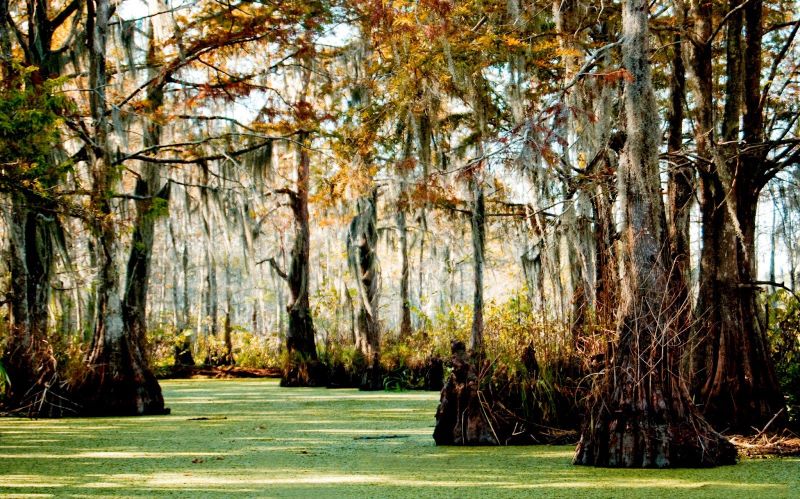


On a Saturday afternoon many years ago, I found myself slogging through a waist-deep cypress dome (swamp) with about a dozen other kids. We were single file and being led by our teacher, Max Harnett. He suddenly stopped and pointed. He put his index finger over his lips. Quiet.
A dead tree limb lay on the ground and extended out about thirty feet over the black, weed-covered water. Coiled up on the base was the biggest cottonmouth I’d ever seen. Its tongue flicked in and out as we evaluated each other.
Unbelievably, the kid nearest to our end of the limb reached out, grabbed it and and shook it. The snake slithered off the limb into the water without making a splash. It did not reappear. For a terrifying five minutes, no one moved. I braced myself for the sensation of two fangs puncturing my thigh.
Max finally gave the OK and we proceeded with our hike. Just another day with the Boca High Audubon club.

Max Harnett was one of the more popular teachers at Boca High. He taught biology and in such a way that you actually wanted to attend his class…vs, say skipping and going to the beach. I had him my senior year.
He was my mentor when I entered the Palm Beach County Science fair. My project involved growing rows and rows of lima bean plants and then dosing each row with increasingly concentrated amounts of 2,4-D, the active ingredient in most weed killers.
He came in on his own time on weekends to help, his black lab Bodie in tow. We used the lab at nearby Florida Atlantic University to slice wafer-thin pieces of the plants, then stain and photograph them under a microscope to find out exactly how it kills plants. My pictures showed the story; it causes uncontrolled growth and plants essentially starve to death.
I won second place and when they announced it on the school PA system, my toes curled and I slumped in my seat. But the other kids thought it was cool, apparently even Diana Pearson who sat two rows over. As Max led the class in a round of applause, I noticed Diana looking at me with new interest.
But my fondest memory of him was as the faculty advisor for the Audubon club. I loved the outdoors, spent many hours wandering the fields and woods of my rural home with field guides and binoculars. But Max was in a different league. He led us all over South Florida in search of different habitats and ecosystems. We trudged through the Everglades, pinelands, mosquito-infested mangrove swamps, palmetto thickets and hardwood forests.

Being on a hike with Max was like having my very own park ranger. He had an encyclopedic knowledge of plants and animals; I never saw him stumped, and he always gave a extra little nugget of info, many of which I still remember. “Hey Max,” a kid would ask, holding out a leaf. “What’s this?” Max would give a brief look. “That’s a wax myrtle,” he say to the 12-15 kids in the club. “Myrica cerifera. Native Americans would boil the leaves, skim off the wax, and make candles.”
All of these trips and camp-outs were fun, but my favorite was the Peace River canoe trip. On the western side of Florida, the river flows just over 100 miles through a variety of environments, primarily rangeland. Max organized an overnight canoe trip with a local outfitter, who lugged us and our canoes 25 miles upriver and dropped us off.
We leisurely floated back with the current, looking at interesting stuff. I had strategically chosen to go with Max and picked his brain as we drifted along. We saw wild boar, otters, hawks, an amazing variety of waterfowl. The water was clear enough to see the pebbly bottom.
We floated single file and Max and I were toward the back. As we approached a bend in the river, we saw the snake kid stand up in the lead canoe and start rocking vigorously from side to side. Max didn’t shout, didn’t get upset, didn’t want to break the spell. “This isn’t gonna turn out well,” he said under his breath. Snake kid’s rocking canoe went around the corner out of sight.
We rounded the bend to an interesting sight. Snake kid and his partner’s heads bobbed in the river, their canoe was on its side and filled with water and surrounding them was a small flotilla of garbage bags with their food, clothes, and camping equipment. Max sighed.
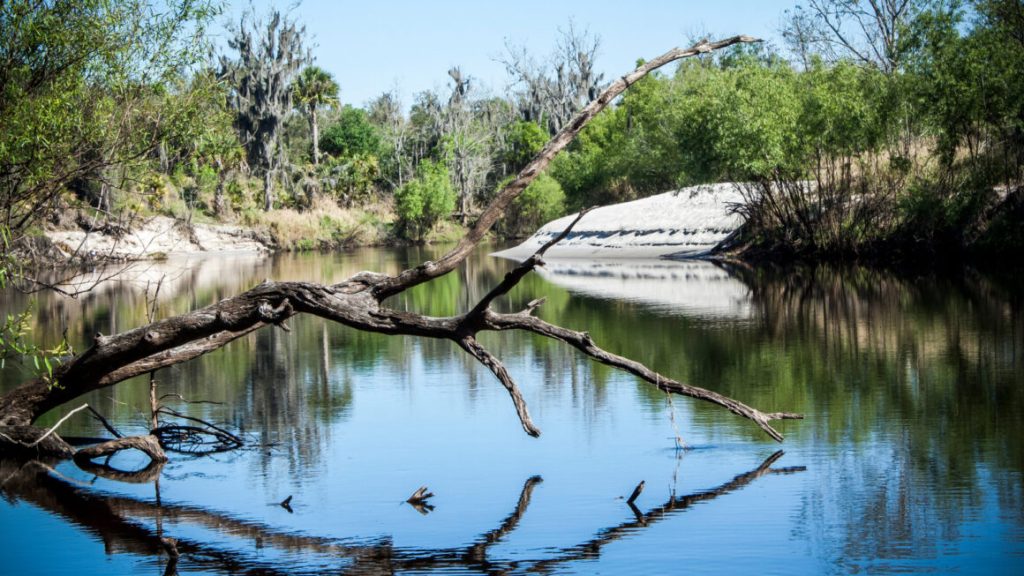
It was getting near dusk, and this was as good a place as any to stop for the night. We helped snake kid and his partner get their soaked gear, then made camp.
That night was magical. Far from the city lights, stars glittered in an inky sky. We sat around a campfire taking it all in. One kid brought a guitar and Max didn’t even say anything about the two cases of beer we’d smuggled with us. Listening to some pleasant chords, looking up at the night sky, hearing the far-off yips of coyotes, I felt a contentment “unexpected in common hours” as 19th-century naturalist Henry David Thoreau put it.
I kept in touch with Max for my first few years at Florida, but eventually we went our separate ways. I often wonder what happened to him.
And to snake kid, who may have gone to his great reward with a Darwin Award 😂
 My little corner of the world
Hi Darryl. Your childhood sounds far more exciting than mine! Where do you get your writing prompts from? WordPress?
MJ
LikeLiked by 1 person
Hi MJ! Yes, on my WP home page is the prompt of the day question. If you don’t see it, click the help icon in the upper right and look for “notifications.” You should be able to add it 😎
LikeLiked by 1 person
That sounds like such an interesting experience. I wonder what happened to snake kid after that…
LikeLiked by 1 person
OMG! When I was a child in Indiana, it was pounded into our heads to stay away from cottonmouths!
LikeLike
Dawn, yeah, pretty crazy! Sorry about the delayed response, I just saw your comment. WP gremlins, lol
LikeLiked by 1 person