


I wrote this short story after seeing a picture in fellow blogger Kevin’s No Theme Thursday post for this past week. Thanks, Kevin, for the usual cool assortment of your craft 🙂
As Willow Spring’s only doctor, I’ve delivered almost all of the babies in our town. Most have gone on to live interesting but ordinary lives where it all began. I see them now, decades later, and give a friendly wave as we pass.
But a few were memorable; those I kept an eye on, watched as their lives unfolded, always ready to help if I could.
And of these few, the one I watched over the most was Hans Richt.

We all have our favorite seasons, I suppose, and mine has always been Autumn. There’s something profoundly settling about the indigo Minnesota skies, the honking V of geese a mile high. Bonfires, pep rallies and cooler weather. The earth preparing for its annual sleep and everything slowing down to a restful pace.
It was on such a late afternoon in October, 1920, that the phone rang in my surgery. It was Clara Richt’s cousin, Giselle. Clara was going into labor; could I come?
As I drove out to the Richt farm, passing drowsy fields of yellow and rust, I thought about her. A second-generation German, she had inherited the family farm after her parents both died of Spanish Influenza. A woman living alone was enough to set the town tongues wagging; but being unmarried and pregnant made her a pariah.
I pulled into the front circular driveway of her farmhouse, grabbing my bag as I climbed from the car. An anxious Giselle, staying with her during her pregnancy, met me on the porch.
“Thank you, doctor, for getting here so quickly,” she said in accented English. “Her water broke about an hour ago and…how do you say it…etwas ist falsch!”
I raced up the stairs. “Something’s not right?” I said.
“Ja, that’s it, something’s not right.”
Clara was laying on the bed, legs up, sweating, breathing hard. A quick exam revealed the problem; a breech delivery.
During the next three hours, by the light of a kerosene lantern, I worked to turn the baby around in the womb. It was hard work, with both Clara and the baby fighting me. The shadows from the lantern, the striped Victorian wallpaper and the oily smoke made everything seem otherworldly.
I finally got the baby turned and Clara, sensing things were now right, strained. Within 15 minutes, things happened as they’ve done since the beginning.
I cut the cord, wrapped the infant, and handed a squalling, squirming baby boy to an exhausted Clara. I washed my hands and pulled up a chair. I spoke earnestly.
“Clara,” I said. “There was a great deal of blood loss. If your son needs a transfusion, it’s essential I know the father.”
She looked stricken as she looked into the face of her new son. I assured her that her secret would be safe with me.
“It’s Sig Thorsen,” she said without looking up. “We were going to be married. But his parents forbid it.” Certainly understandable; anti-German sentiments following the Great War still ran high in Willow Springs. “But by that time, I was already—“
She paused, overcome with grief and exhaustion. She ran her fingers through her son’s thin, wet hair.
“He— he doesn’t know it’s his. I told him it was a boarder who was staying at our house. Please don’t—“
“Yes, I understand,” I said gently. “Please call if you need me.”
I let myself out as long shadows from the lantern darkened the bedroom walls. I took a final look at Hans and Clara, now both asleep.
Over the years, I saw Clara infrequently; she wisely remained reclusive on her farm. The only time I saw young Hans was if he was working in the fields, or during his annual checkup.
As the years passed with startling swiftness, he grew from a toddler to a boy, to a teenager. On each occasion, he displayed a keen interest in medicine and my practice. He asked a lot of questions and I was impressed by his instinctive knowledge.
When he was 13, Clara brought him in for his checkup. As I looked in his throat, Clara spoke.
“I’m afraid this may be the last time you see Hans for a while,” she said.
I looked in his ear; slightly inflamed but insignificant. “Oh?”
“Yes, he’s going back to Germany.” I stopped and looked at her.
“You see,” she said, “he’s getting picked on in school… and my family offered. I think it’s best for everyone.”
Hans spoke. “I’m going to become a doctor, like you,” he said quietly. “I want to help people.”
Hans couldn’t have picked a worse time to return to his homeland for study. In 1933, a little-known veteran of the Great War began to rise to power, determined to return Germany to its pre-war greatness.
I stopped in at Clara’s farm sometimes just to check on the latest. By 1938, Hans was at the top of his class in medical school, but the clouds of war were building. He wrote that he had been inducted into the Wehrmacht—the German army—as a medical officer. He had no choice.
When war broke out on September 1, 1939, Hans was moved to the front lines. His letters described screeching dive bombers, the oily smell of machine guns, the clanking clattering of tanks; but above all, the screams of the wounded and the dying.
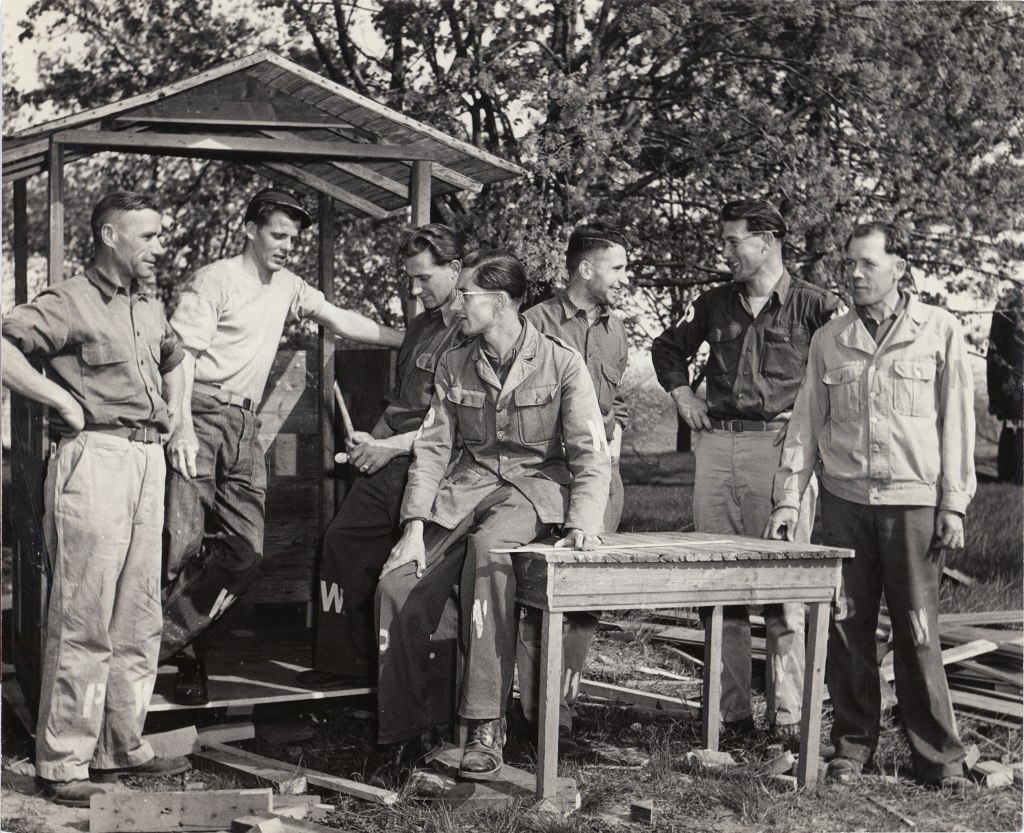
His unit was surrounded in December and Hans was captured. He was sent initially to a POW camp in France; but then, incredibly, to a stateside POW work camp just outside Willow Springs.
If the Richts were not hated enough before the war, Hans coming back as a POW made them beyond contempt. The Norwegians in Willow Springs harbored an especially vicious hatred; word had gotten back of the cruel Nazi occupation of Norway in 1940 and the murder of Norwegian resistance fighters.
The POW camp was only a few miles away and the inmates helped at the farms where men had left to fight. Hans served as the camp’s doctor.
That winter I slipped on the ice and sustained a compound fracture of my ankle. I was immobilized with a cast and crutches; Hans was recruited to assist me in the surgery.
Although most of the people of Willow Springs hated him, they grudgingly allowed him to set broken bones, stitch wounds, palpate their throats and prescribe the new sulfa drugs that fought infections.
One bitter January morning, the phone rang. It was Sig Thorsen. Theresa had been sick with the flu for a week; now she was wheezing, unable to breathe, running a fever of 103.
“I hate to ask it… but can you have him come look at her?” I could feel the vitriol through the crackly connection.
“Of course,” I said. “I’ll come too. Leaving now.”
As Hans examined Therese, Sig stood close by, glowering. His fists were knotted; his cousin in Norway had been executed by the Nazis the previous month. I thought several times Sig was going to strike the young man.
Hans finished his exam and opened his bag. “I’m afraid it’s gone into pneumonia,” he said. “I want her to take one of these pills twice a day.” He handed a bottle to Sig. Sig scowled.
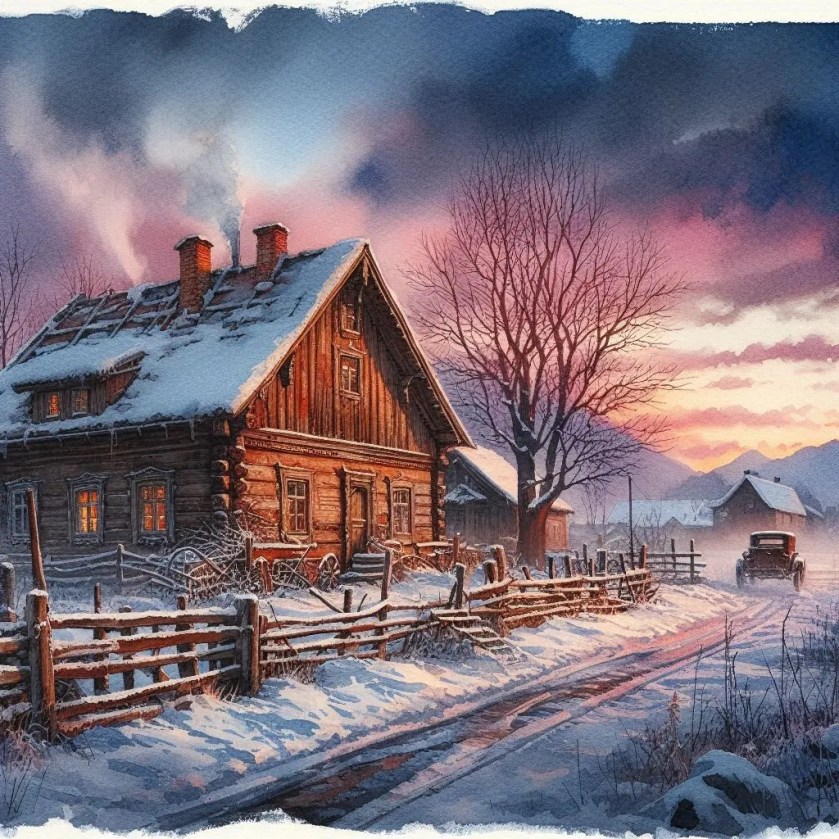
We stopped in daily to check on her; their square rough-hewn house with the twin chimneys and ramshackle fencing became a familiar sight during our twilight rounds.
Despite our efforts, Therese became progressively weaker, sicker. Her wracking cough turned her face blotchy and she lay gasping, eyes closed. Sig could finally hold back no longer. He grabbed Hans by the shoulders and shook him wildly.
“You Nazi bastard!” he shouted. “You fought against your own country and now you can’t even save my wife! You piece of shit! I hate you! I’ll kill you!”
He rained blows on Hans who struggled to defend himself. He was maniacal, beyond reason, punching and cursing and screaming. He stopped long enough to reach into the closet. He pulled out a shotgun.
His expression was murderous. His hair hung in his face and his breathing was labored. I watched in horror as he slowly brought up the shotgun until it was in Hans’ face. Therese weakly cried from the bed.
“Sig!” she gasped. “What are you doing? You’re not a killer! He’s just a boy!” She managed a bit more in Norwegian; then, her energy spent, she fell back, unconscious.
I used my crutch to knock the gun away. “Sig!” I shouted. “There’s something you need to know!”
He stood expressionless, not looking at me, not looking at Therese. Just glaring at the young doctor who had tried his best.
I spoke softly. “Sig,” I said. “Hans… is your son.”
Sig’s expression slowly changed in a way I can’t describe. I was once high in the Scottish highlands, and the sun was trying to come out. His countenance was like that; patches of sunlight racing across the hills as the sky struggled to clear. He blankly looked at me, then Hans. It was impossible to discern his thoughts.
“…What… “ he muttered. “Can’t be… I never…this Nazi…” he trailed off in utter confusion and defeat.
I explained about Clara. How there was no boarder. How his son had grown up just a few miles away, ostracized, heckled, unloved, until he fled to his family in Germany.
Hans stared, face pale, shoulders heaving; this was all news to him as well.
He looked at Sig; Sig stared at him.
In the bed, Clara groaned and breathed her last. Rage and grief twisted Sig’s face.
With a scything sweep, he raised the shotgun and pointed it at Hans. “This Nazi is NOT MY SON!” There was a deafening blast, a brilliant flash of light, and Hans flew across the room, his chest a bloody pulp.
I stared in horror. His eyes blinked several times, then his focus became fixed; a tiny light moving down a long dark hallway that finally winked out.
The jury deliberated only two days. Despite losing his wife, despite the anti-German sentiment, his actions were judged reprehensible. Sig was sentenced to life in the Minnesota State Prison.
I hung it all up one Spring day in 1955; 40 years of tapping on knees and delivering babies was enough.
The empty Thorsen place fell into disrepair; nobody wanted to live there. Before I left to head upstate for a quiet retirement, I took one final drive by it. The windows were broken, the fence was gone, part of the roof had fallen in.
I thought about Hans, his skill, his kindness, how he had been swept up in the madness of the time and what could have been. I thought about Sig, sitting in his cell up in Stillwater, pondering the son he knew for less than five minutes. I wondered how often he regretted his action.
Life races by and we sometimes have very little time to react. Sometimes I lay awake at night, reliving it. A lot of what-ifs came to mind. Laying awake as the world slumbers, asking questions better left unanswered.
As I put it in gear, a snippet of a poem came to mind. Something I somehow remembered from English Lit a lifetime ago:
“For all sad words of tongue and pen,
The saddest are these…
It might have been.”
The saddest, indeed.
 My little corner of the world
Very intense and very sad tale, Darryl. I wonder how many were conflicted (perhaps not to this extreme) during this time in our history. Excellent story, as always. 🙏
LikeLiked by 1 person
Thanks, Kevin. I struggled with the ending; I really wanted to make it happy but that’s how it wrote itself. My grandparents were from Norway and heard stories during the occupation that always stayed with me. I always wondered what it would have been like to be a German-American or Italian-American during that time and be potentially shooting at your own family.
LikeLiked by 2 people
It cannot have been easy, I am sure.
And yes, sometimes these things write themselves. They know how they want to end, I guess.
LikeLiked by 1 person
My goodness, Darryl! This story hit home in more ways than you could ever know. In fact, I’m in the process of writing a book about the anti-German racism my grandfather and his family experienced after immigrating to Canada during their youth just as WW2 was getting started. Your story is well-written, as always – and with more truth than many today even realize.
LikeLiked by 1 person
Thanks, Terry! I’m glad you enjoyed it. Thanks for reading and the comment 😎
LikeLiked by 1 person
This is quite a story, Darryl. It was realistic and emotional. Unfortunately, there have always been prejudices.
LikeLiked by 1 person
Thanks, Mary! Appreciate you reading and commenting!
LikeLike
This is a great story, makes me think about the prejudice we face now as well as then.
LikeLiked by 1 person
Thanks, Ernie! Appreciate you reading and commenting 😎
LikeLiked by 1 person
What a wonderful story!
LikeLiked by 1 person
Thanks, Dawn! I appreciate you reading and your kind remark 😎
LikeLike
Difficult one to take in, Darryl, but astute and profound from several directions at once. Excellent.
LikeLiked by 2 people
This was quite an intense read but I think you did a great job describing the conflict many faced during this time.
LikeLiked by 1 person
Thanks, Pooja! Appreciate the kind words and for reading it 😎
LikeLiked by 1 person
I’m floored by this masterful piece, Darryl ❤ … Should be a novel! Emotional read and I felt the blast! Tragic and yet powerfully pertinent still today!
LikeLiked by 2 people
Thanks, Sirius! I struggled with the ending… most times I like (“happy endings… nobody fights” ~ Jimmy Buffet lol) but this one just seemed to need something grittier. I really appreciate you reading my stuff and commenting… makes it all worthwhile if one person likes it, but esp you 😎🙏
LikeLiked by 1 person
Hit hard, but very real! Miss Jimmy Buffet already! You are a phenomenal writer and can draw a reader like no other … 🙂 especially me! Thank you and wherever the creative process / journey takes you, I’m along for the ride (Shotgun! but a better one) !!!
LikeLiked by 1 person